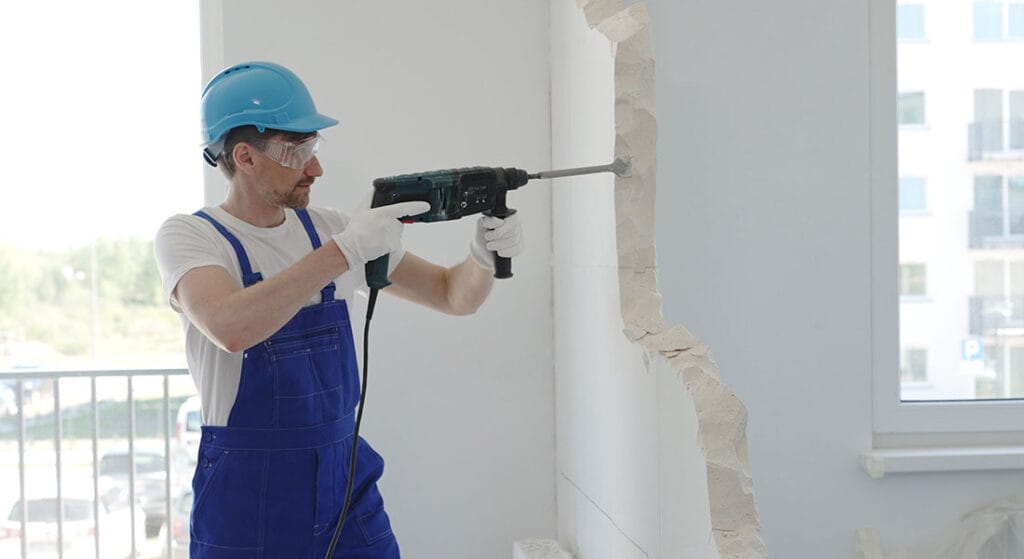
Knocking down an internal wall is one of the most impactful things you can do to a Gold Coast home. Done right, it transforms a series of closed, compartmentalised rooms into an open, light-filled space that is worth more, functions better, and simply feels like a more liveable home. Done wrong, it is one of the most expensive mistakes in residential renovation.
The difference between those two outcomes almost always comes down to one thing: whether you engaged the right professionals from the start. Internal wall removal sounds straightforward. The reality involves structural assessment, hidden services, council approval, asbestos management in older homes, specialist dust control, and proper waste disposal. This guide covers every step. Spotless Demolition has been removing internal walls in Gold Coast and Brisbane homes for over 30 years. Here is what the process actually involves.
Get a Free Wall Removal QuoteSpotless Demolition provides free on-site inspections across the Gold Coast and Brisbane. No obligation. |
Step 1: Determine Whether the Wall Is Load-Bearing
This is the first and most important question, and it cannot be answered by looking at the wall from the other side of the room. A load-bearing wall carries the weight of the structure above it, transferring that load down to the foundations. Removing a load-bearing wall without installing an appropriate beam or lintel to redistribute that load will, in time, cause the structure above to move, crack, and in serious cases, partially collapse.
A non-load-bearing wall, by contrast, is a partition: it divides space but carries only its own weight. Removing a non-load-bearing wall is structurally less complex, but it still requires professional assessment to confirm what it is before work begins.
How do professionals determine whether a wall is load-bearing? The assessment considers:
- The wall’s position relative to the floor joists and roof structure above it
- Whether the wall runs perpendicular or parallel to the floor joists (walls running perpendicular are more likely to be load-bearing)
- Whether the wall aligns with structural elements directly above or below
- The age and construction type of the building, as older homes and certain construction styles are more likely to use internal walls structurally
- Physical examination of the wall structure itself, which may require partial opening in low-risk locations
For load-bearing walls, a structural engineer’s assessment and certification is required before removal proceeds. This is not optional and is part of the council approval process where approval is required.
| ⚠️ Never assume: The visual appearance of a wall, its thickness, or its material type is not a reliable indicator of whether it is load-bearing. Walls that look like simple plasterboard partitions can carry significant structural load depending on how the building was designed. Always have a professional assessment before any wall removal begins. |
Step 2: Check for Hidden Services
Even a confirmed non-load-bearing wall can contain services that make its removal considerably more complex and costly than the visible structure suggests. Hidden services within internal walls include:
- Electrical wiring: power circuits, lighting circuits, and data cabling running through or across the wall cavity. These must be isolated, rerouted, or removed by a licensed electrician before demolition work proceeds
- Plumbing: water supply lines and waste pipes are frequently routed through internal walls, particularly in bathrooms, kitchens, and laundries or walls adjacent to wet areas
- Gas lines: in homes with gas cooking or heating, gas lines may run through internal walls toward appliance locations. Disturbing a gas line without proper isolation is a serious safety risk
- HVAC ducting: ducted air conditioning systems route through wall cavities and ceiling spaces. Removing a wall that contains or supports ductwork requires coordinating with an air conditioning technician
Identifying these services before demolition, rather than discovering them partway through, is one of the primary reasons to engage a professional demolition team rather than attempting a DIY wall removal. Spotless Demolition identifies and coordinates around hidden services as part of its standard process.
Step 3: Check for Asbestos
For any Gold Coast home built before 1990, and for some homes built between 1990 and the mid-2000s, the presence of asbestos-containing materials must be assessed before wall removal proceeds. Asbestos was used extensively in plasterboard sheeting, textured ceiling coatings, wall linings, and other building materials common in Queensland homes of that era.
Disturbing asbestos-containing materials without proper containment and licensed removal is illegal under Queensland law and a serious health risk. Asbestos fibres, once airborne, can cause mesothelioma and other serious respiratory conditions. If there is any uncertainty about whether asbestos is present, a sample must be tested before work begins. Spotless Demolition’s licensed asbestos removal service handles assessment, safe removal, containment, and legal disposal as a complete service.
| 💡 Age of your home is the key indicator: Homes built before 1985 almost certainly contain asbestos somewhere. Homes built between 1985 and 2003 may contain asbestos. Homes built after 2003 are extremely unlikely to contain it in original materials. If you are not certain when your home was built, a pre-demolition asbestos assessment is always the right call before touching internal walls. |
Step 4: Council Approval Requirements in South East Queensland
In Queensland, not all internal wall removal requires council approval. The key determinant is whether the wall is load-bearing.
- Non-load-bearing partition removal: generally does not require building approval in Queensland, provided the work is carried out by a licensed contractor. However, your local authority (Gold Coast City Council or equivalent) may have specific requirements. Check before starting
- Load-bearing wall removal: requires a building development approval (DA). This involves submitting structural engineering drawings showing how the load will be redistributed through the new beam or lintel. The QBCC (Queensland Building and Construction Commission) regulates this work and requires it be performed by licensed contractors
- Listed or heritage properties: additional restrictions may apply to properties on heritage registers. The Gold Coast City Council heritage planning team can advise
Spotless Demolition works within the Queensland building approval framework and can advise at the quoting stage on what approvals your specific project is likely to require.
Step 5: Dust Management During the Removal
Internal wall removal, particularly of plasterboard, brick, and masonry, generates significant quantities of airborne dust. Fine plasterboard dust contains gypsum particles. Brick and mortar dust contains silica, which is a regulated hazardous substance under Queensland workplace health and safety law when exposure occurs at certain concentrations.
Spotless Demolition uses industrial-grade air cleaners and containment systems on every internal demolition job. This is not simply a comfort measure but an important health and safety practice, both for the demolition team and for the residents of the home. Furniture and possessions are covered with protective drop sheets before work begins, and the dust management approach is systematically applied throughout. After the removal, the area is cleaned to leave the site ready for the next trade.
Step 6: Structural Beam Installation
When a load-bearing wall is removed, it must be replaced by a structural beam (typically steel or engineered timber) that transfers the load from above to new or reinforced posts at either end. This beam installation is the work of a structural engineer and a licensed builder, working from engineer-certified drawings that specify the beam size, span, and connection details for the specific application.
The cost and complexity of the beam installation is one of the significant cost variables in load-bearing wall removal, separate from the demolition cost itself. The size of the opening, the span, the load above, and the connection requirements all affect the beam specification. This is why load-bearing wall removal always costs more than non-load-bearing removal, often substantially more when engineering, approval, and materials are accounted for.
Step 7: Waste Removal and Site Clearance
A knocked-down wall leaves a substantial volume of material: plasterboard sheets, timber studs and noggings, brick rubble, and associated debris. This material needs to be removed cleanly and disposed of responsibly. Spotless Demolition’s renovation and rubble waste removal service is integrated into the demolition process. The team does not leave rubble for the homeowner to arrange separately. Everything is removed, sorted for recycling where the material allows, and disposed of in compliance with Queensland waste regulations.
What Does Internal Wall Removal Cost on the Gold Coast?
| 📋 Pricing Note The cost figures below are general market estimates for South East Queensland based on publicly available industry pricing information. They are not Spotless Demolition price quotes. Your actual cost depends on the specific wall, its materials, whether asbestos is present, required approvals, hidden services, and access conditions. Always request a free on-site inspection and quote for an accurate project price. |
With that context, here is a general framework of the cost variables and indicative ranges for internal wall removal work in South East Queensland:
| Wall type and scope | Indicative cost range (estimate only) | Key cost drivers |
|---|---|---|
| Non-load-bearing partition (plasterboard stud, single wall) | Approx. $500 to $1,500 (est.) | Wall length and height; hidden services; waste disposal |
| Non-load-bearing partition (brick or masonry, single wall) | Approx. $1,000 to $3,000 (est.) | Material weight; additional dust management; waste volume |
| Load-bearing wall removal (demo component only) | Approx. $1,500 to $4,000+ (est.) | Wall construction type; site complexity; safety requirements |
| Structural beam supply and installation (separate cost) | Approx. $2,000 to $8,000+ (est.) | Beam span; load above; engineering and approval costs |
| Asbestos-containing wall (additional cost when asbestos present) | Add approx. $500 to $3,000+ (est.) | Volume of ACM; containment requirements; licensed disposal |
The total all-in cost for a simple non-load-bearing plasterboard wall with no hidden services and no asbestos will be at the lower end. A load-bearing wall requiring engineering, approval, beam installation, and asbestos management can reach $15,000 or more when all components are included. This is not unusual for a project of that complexity and is a normal part of structural renovation work.
Common Mistakes That Make Wall Removal More Expensive
Spotless Demolition sees the same costly errors on renovation jobs repeatedly. Knowing them helps homeowners avoid them.
| Common mistake | What it leads to |
|---|---|
| Assuming the wall is non-load-bearing without professional assessment | Removing a load-bearing wall without a beam causes structural movement and potential collapse; rectification costs can be massive |
| Starting demolition before confirming presence of asbestos | Illegal in Queensland; health risk to occupants; mandatory remediation required; additional regulatory cost |
| Not identifying electrical, plumbing, or gas in the wall first | Services cut or damaged mid-demolition; delays while licensed tradies repair; additional cost |
| Proceeding without required council approval | Work may need to be reversed; fines apply; can cause problems when selling the property |
| Using unlicensed contractors to save money | No insurance protection if something goes wrong; QBCC licensing exists specifically because structural mistakes are dangerous |
All of these risks are avoided by engaging a licensed, experienced, properly insured demolition contractor who coordinates the full process from assessment through to site clearance.
Get an Accurate Quote for Your Wall RemovalFree on-site inspection across the Gold Coast and Brisbane. Fully insured to $20 million. 30 years experience. No obligation. |
Frequently Asked Questions
How do I know if the wall I want to remove is load-bearing?
The only reliable way to determine this is through a professional assessment. Visual inspection, wall thickness, and material type are not reliable indicators. Spotless Demolition provides free on-site inspections and the assessment of whether a wall is load-bearing is part of that process. For confirmed load-bearing walls, a structural engineer must be engaged to design the replacement beam. Spotless Demolition coordinates this as part of its coordinated trade solutions approach.
How long does internal wall removal take?
A simple non-load-bearing plasterboard partition can typically be removed in a single day, including dust management and site clearance. A load-bearing wall removal involving engineering, approval, and beam installation is a multi-stage process that unfolds over several days to weeks depending on the approval timeline and trade scheduling. An accurate timeline is part of the Spotless Demolition quote process.
Do I need to move out of my home during wall removal?
For most internal wall removal jobs, residents can remain in the home. Spotless Demolition’s dust management systems, including industrial air cleaners and protective sheeting, are specifically designed to contain the demolition area and protect the rest of the home. If the job involves asbestos removal, temporary vacation of the affected area is required for safety during that specific phase. Your project consultant will advise on any temporary access requirements at the quoting stage.
Can Spotless Demolition remove multiple walls as part of a larger renovation?
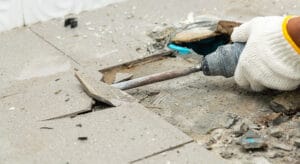
Yes. Spotless Demolition handles full residential demolition and strip-out work as well as targeted internal wall removal. For larger renovation projects involving multiple walls, bathroom strip-outs, tile removal, and full interior demolition, the team coordinates all stages as a single managed project. Get in touch to discuss the full scope of your renovation and receive a comprehensive quote.