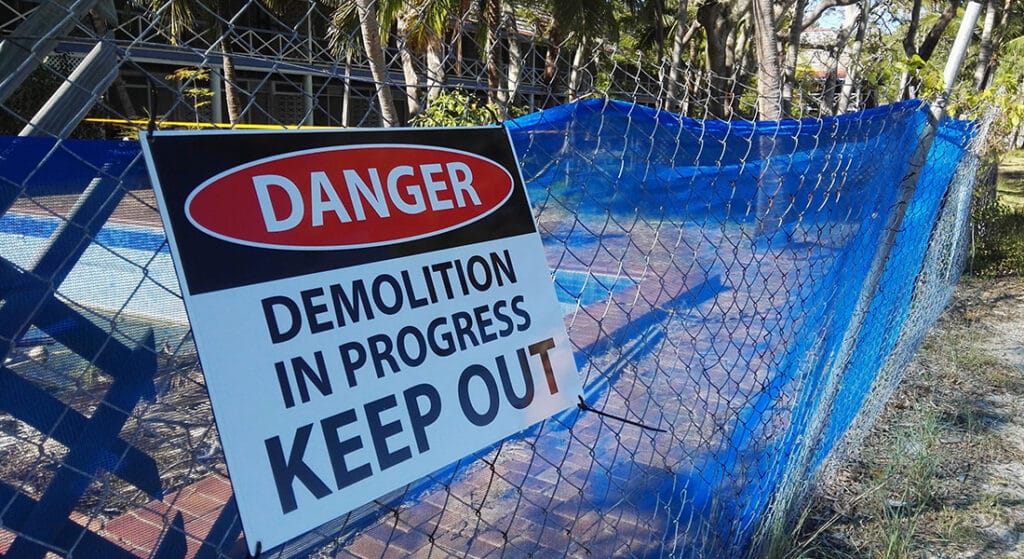
One of the most common misconceptions about demolition work is that a permit is only needed for large, dramatic projects: knocking down an entire house, clearing a site for a new development. In reality, demolition permit requirements in Queensland, including in Gold Coast and Brisbane, extend to a much wider range of projects than most property owners expect, including some work that is happening inside an existing building.
Starting demolition work without the right approvals in place can result in stop-work orders, fines, requirements to restore what was demolished, and complications when selling the property. Spotless Demolition manages the project process across the Gold Coast and Brisbane, including the approval requirements that apply to each job. This guide explains the framework so you know what to expect before you start.
Not Sure What Approvals Your Job Needs?Spotless Demolition provides free site inspections and advice on the approval process. Gold Coast and Brisbane. Call 1300 128 970. |
The Queensland Approval Framework: Two Parallel Systems
Understanding demolition permit requirements in Queensland means understanding that two distinct but overlapping approval systems may apply to a given demolition project.
QBCC licensing and compliance
As discussed in our companion article on DIY vs professional demolition, the Queensland Building and Construction Commission (QBCC) governs who can legally perform demolition work. A QBCC-licensed contractor must be engaged for most demolition beyond minor owner-occupier work. This is not a council permit but a state government licensing requirement.
Council building and development approvals
Separately, your local council, whether Gold Coast City Council or Brisbane City Council, requires a development permit for most demolition work under the Planning Act 2016 (QLD) and the Building Act 1975 (QLD). This is the ‘permit’ most people are thinking of when they ask whether they need council approval to demolish.
The two systems operate independently: having a QBCC-licensed contractor does not automatically mean you have the council approval you need, and having council approval does not authorise unlicensed demolition work.
When a Demolition Permit Is Required: The General Rule
Under the Building Act 1975 (QLD), demolition of a building or structure generally requires a building development approval (a development permit) from the local government. There are some exemptions, but they are narrower than most people assume.
As a general starting point, a development permit for demolition is typically required when:
- A building or structure (or a significant part of it) is being demolished
- An owner-builder permits the use of the building, which is not possible for demolition work beyond very limited scope
- The demolition forms part of a broader development approval application (for example, where a site is being cleared for a new build)
Minor exemptions exist for specific categories of minor structures and minor works, but these exemptions are defined by the Building Regulation 2021 (QLD) and are more limited than most people expect.
Gold Coast City Council: What Triggers an Approval Requirement
Gold Coast City Council (GCCC) assesses demolition applications under the Planning Act 2016 (QLD) and the Gold Coast Planning Scheme. The following situations typically trigger a development application requirement at Gold Coast City Council:
- Full demolition of a dwelling or structure: demolishing an entire residential or commercial building on the Gold Coast requires a development permit from GCCC. This applies whether you are clearing the site for a new build, removing a secondary dwelling, or demolishing a detached garage or outbuilding above certain thresholds
- Properties with heritage or character overlays: Gold Coast City Council’s planning scheme identifies heritage places and character residential areas. Demolition of a structure with heritage significance, or demolition in a character residential area, may trigger a more complex development application process with additional assessment criteria. In some cases, demolition of heritage-listed structures may be refused or subject to strict conditions
- Demolition near waterways and sensitive areas: properties within or near mapped waterway corridors, coastal areas, or other environmental overlays on the Gold Coast may require referral of the development application to additional state agencies before approval can be granted
- Asbestos-containing structures: where a structure to be demolished is known or suspected to contain asbestos, the demolition approval process typically requires confirmation of an asbestos survey and a management plan as part of the application
| 🔶 Check your property’s overlays before applying: The Gold Coast City Council’s online mapping tools show the planning scheme overlays that apply to your specific property, including heritage, character, and environmental overlays. Checking these overlays before engaging a demolition contractor helps you understand the likely complexity of the approval process and timeline. |
Brisbane City Council: What Triggers an Approval Requirement
Brisbane City Council (BCC) operates under the Brisbane City Plan 2014, which sets out the development and demolition approval requirements for properties within the Brisbane local government area. The following situations typically trigger a development application requirement at Brisbane City Council:
- Full demolition of any building in Brisbane: like Gold Coast, full demolition of a residential or commercial building in Brisbane generally requires a development permit from Brisbane City Council
- Character residential demolition and removal: Brisbane has extensive character residential areas mapped in the City Plan where houses of specific pre-1947 character are identified for protection. Demolition or removal of a character house in these areas triggers specific assessment requirements, and in some instances may not be approved even when a site is being redeveloped. This is one of the most significant and frequently encountered demolition approval complexities in Brisbane
- Heritage places: Brisbane has local and state-heritage-listed properties. Demolition of a heritage-listed building or of a building within a heritage precinct can trigger referral to Queensland Heritage Council and the state government. Demolition of a state heritage listed place requires state government approval, not just local government approval
- Internal structural demolition in some commercial buildings: larger-scale internal demolition in commercial properties may require a development permit depending on the building classification and the nature of the work
| ✦ Brisbane character homes: a common source of surprises: Many Brisbane homeowners are surprised to discover that their property, which may not look particularly old or significant, falls within a character residential overlay. A house in a character residential area cannot simply be demolished to clear a site for a new build without council assessment. If your Brisbane property is pre-1947 era construction, check its character status before making any plans involving demolition. |
Internal Demolition: Does It Need a Permit?
This is the question that catches many residential renovators off guard. Internal demolition, such as removing walls, removing internal fitouts, stripping bathrooms or kitchens to the structure, can also require building approval in some circumstances.
Under the Building Act 1975 (QLD) and the Building Regulation 2021 (QLD), internal building work that is classified as building work (as defined in those Acts) requires a building development permit. The key factors that determine whether internal demolition is approval-dependent include:
- Structural impact: any internal demolition that affects load-bearing or structural elements of the building requires building approval. This includes removing structural walls, modifying beam configurations, and other work that alters the structural system of the building
- Impact on regulated systems: demolition that significantly affects fire safety systems, emergency egress, or other regulated building systems may require a building permit
- Building classification: higher-classification commercial and industrial buildings (Class 5 to Class 9 buildings in the NCC/BCA classification system) have more extensive permit requirements for internal work than standard residential buildings
For most straightforward residential internal demolition (stripping out a bathroom, removing a kitchen, removing non-structural walls), a building permit from council may not be required, but QBCC-licensed contractors should be engaged for any structural work. When in doubt, contact your local council to confirm.
The Asbestos Survey Requirement
In Queensland, before demolition of a building or structure that may contain asbestos-containing materials, an asbestos survey is required. This is a state government requirement connected to the Work Health and Safety Act 2011 (QLD) obligations.
The type of asbestos survey required depends on the nature of the demolition:
- Management survey: used for properties that are to remain in use or occupied, to identify and manage the risk of asbestos-containing materials in place without full demolition
- Refurbishment or demolition survey (detailed survey): required before any refurbishment or demolition work that may disturb asbestos-containing materials. This is the survey type required before most demolition projects in Queensland buildings that predate the national asbestos ban (effective from 31 December 2003)
Spotless Demolition can coordinate with asbestos assessors as part of the project management process. Our asbestos removal service is available on the Gold Coast and in Brisbane and ensures that asbestos-containing materials are safely identified, removed, and disposed of before or during the demolition process.
What Happens If You Demolish Without a Permit?
Proceeding with demolition that requires a development permit, without that permit being in place, is an offence under the Planning Act 2016 (QLD) and the Building Act 1975 (QLD). The consequences can include:
- Stop-work orders requiring all demolition activity to cease immediately
- Enforcement notices requiring restoration of what was demolished to its original state, at the owner’s cost
- Penalty infringement notices and/or prosecution
- Complications on the property title: unpermitted demolition work can affect the ability to sell, refinance, or insure the property
- Complications for subsequent development applications on the site, which may require demonstration that previous demolition was lawfully approved
How Spotless Demolition Helps
Navigating the approval requirements for a demolition project on the Gold Coast or in Brisbane takes time and specific knowledge of each council’s planning scheme and building approval processes. Spotless Demolition’s Gold Coast and Brisbane team works with clients to understand what approvals their specific project requires, can advise on likely timelines and processes, and coordinates the project to ensure that demolition work commences lawfully and proceeds safely.
Whether your project is a full residential demolition, a commercial fitout strip-out, or a targeted internal wall removal, we can provide a free site inspection and advice on the specific approval requirements for your job.
Let Spotless Demolition Handle the ProcessFree inspections. Experienced Gold Coast and Brisbane demolition team. Family owned. Safe and eco-friendly. Call 1300 128 970. |
Frequently Asked Questions
Do I need a permit to demolish a shed or garage on the Gold Coast?
It depends on the size and construction of the shed or garage. Some very small, non-habitable structures (typically unenclosed structures under a certain floor area threshold) may be exempt from requiring a development permit under the Building Regulation 2021 (QLD). Larger sheds, enclosed garages, and any structures connected to services (power, water, sewerage) typically require a development permit before demolition. Check directly with Gold Coast City Council for the specific thresholds that apply to your structure, or contact Spotless Demolition for advice on your specific project.
How long does a demolition permit take to get approved in Brisbane?
Simple demolition applications in Brisbane where no overlays apply and no heritage or character assessment is required can be assessed relatively quickly, sometimes within a few weeks. Applications involving character residential assessment, heritage referral, or other complex planning considerations can take considerably longer. The assessment timeline also depends on the council’s current workload at the time of lodgement. Spotless Demolition advises clients to build realistic approval timeframes into their renovation or construction schedules.
Can Spotless Demolition help with the permit application process?
Spotless Demolition can advise on what approvals your specific demolition project is likely to require and can help coordinate with the relevant parties to support the approval process. Contact us to discuss your project at a free site inspection, where we can assess the scope of work and the approval requirements that apply.