Internal residential demolition can transform a home — but without proper dust management, it can also create serious health risks and costly damage.
Dust from internal home demolition doesn’t just settle on surfaces. It spreads through air currents, enters HVAC systems, contaminates carpets and furniture, and lingers long after the job is complete.
Professional demolition contractors use structured dust control systems to protect both the property and its occupants. In this guide, we explain the methods, equipment and benefits of dust-free internal demolition — and why it matters for your home.
Why Dust Management Matters in Internal Home Demolition
Internal demolition generates fine particles from:
- Plasterboard and gyprock
- Timber framing
- Concrete and masonry
- Tiles and adhesives
- Insulation materials
These particles can:
- Trigger respiratory irritation
- Settle deep into carpet fibres
- Damage furniture finishes
- Block HVAC systems
- Create lingering odours
- Spread into unaffected rooms
Effective dust management protects indoor air quality and prevents unnecessary clean-up costs.
Core Dust Management Techniques Used in Internal Demolition
Professional residential demolition teams apply layered control strategies — not just one solution.
1. Physical Containment Barriers
Containment is the first line of defence.
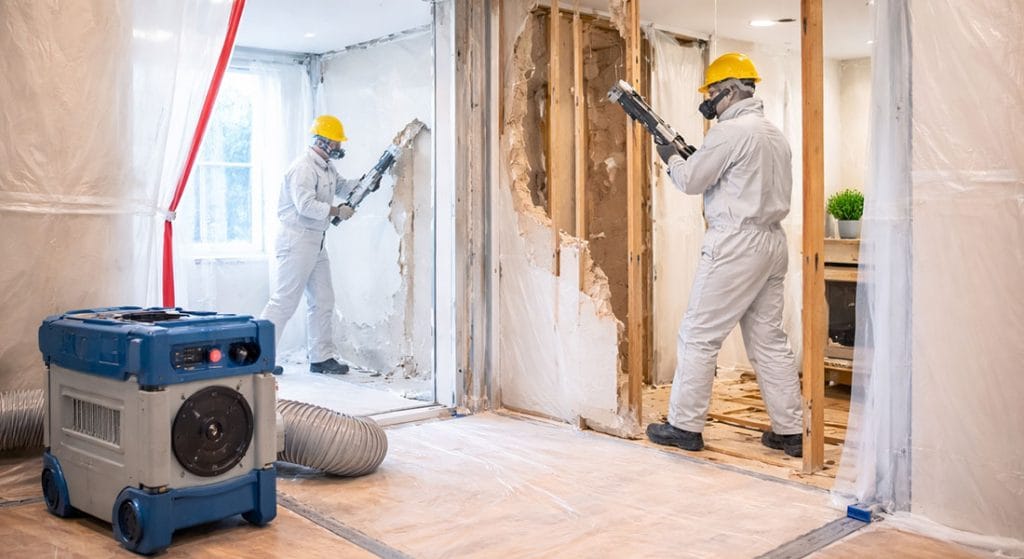
Demolition teams install:
- Heavy-duty plastic sheeting
- Zip-wall containment systems
- Temporary framed barriers
- Sealed doorways
- Floor-to-ceiling enclosures
These barriers isolate demolition zones from the rest of the home, preventing dust migration into living areas.
2. Negative Air Pressure Systems
One of the most effective dust-control techniques is creating negative air pressure inside the demolition zone.
This involves:
- Industrial air scrubbers
- HEPA filtration units
- Exhaust fans vented externally
Negative pressure ensures air flows into the work zone rather than out of it — containing airborne particles before they spread.
3. HEPA Filtration & Air Scrubbers
High-Efficiency Particulate Air (HEPA) filters capture extremely fine particles.
Professional equipment:
- Filters microscopic dust
- Continuously circulates air
- Reduces airborne contaminants
- Improves on-site air quality
Air scrubbers are essential during internal strip-outs and partial renovations.
4. Surface Protection for Carpets & Furniture
Protecting interior finishes is just as important as controlling airborne dust.
Techniques include:
- Carpet film protection
- Drop sheets
- Furniture wrapping
- Protective floor boards
- Plastic covering for cabinetry
Sensitive areas are sealed before demolition begins.
5. HVAC System Isolation
One of the most overlooked risks in internal demolition is contamination of heating and cooling systems.
Dust can:
- Enter return air vents
- Circulate throughout the home
- Settle in ductwork
- Reduce system efficiency
Professional demolition contractors will:
- Seal vents
- Shut down HVAC systems
- Cover returns
- Recommend post-project duct inspection if required
This prevents dust from spreading beyond the demolition zone.
6. Controlled Demolition Techniques
How materials are removed matters.
Rather than aggressive mechanical breakouts, controlled internal demolition may involve:
- Section-by-section removal
- Reduced-impact dismantling
- Targeted extraction tools
- Dust-suppressed cutting equipment
Less impact = less airborne debris.
7. Wet Cutting & Dust Suppression
For concrete or masonry removal, water-based dust suppression is often used.
This technique:
- Reduces airborne silica
- Minimises particle spread
- Controls fine dust at the source
Silica dust exposure can pose serious health risks, making this step critical in certain internal works.
Equipment Used in Dust-Free Internal Demolition
Professional demolition teams typically use:
- HEPA-filtered industrial vacuums
- Air scrubbers
- Negative air machines
- Dust extraction attachments
- Containment systems
- Personal protective equipment (PPE)
DIY demolition often lacks this equipment — which increases the risk of contamination and health exposure.
Health Benefits of Dust-Controlled Demolition
Effective dust management protects:
- Children and elderly occupants
- People with asthma or respiratory sensitivities
- Pets
- Trades working on-site
- Neighbours in close proximity
Fine demolition dust can linger in indoor air for days without proper filtration.
For more detail on risk management in residential demolition, see our guide on Health & Safety in Residential Demolition.
Property Protection Benefits
Dust-free demolition reduces:
- Post-renovation cleaning costs
- Carpet replacement risk
- Furniture damage
- Electrical contamination
- Mould risk from dust settling in moisture-prone areas
It also helps maintain the integrity of areas not being renovated.
Why Professional Demolition Matters
Internal home demolition is more complex than simply removing walls or cabinetry.
Professional residential demolition contractors:
- Plan containment before starting
- Protect unaffected areas
- Use commercial-grade filtration
- Follow safety protocols
- Comply with Australian health regulations
At Spotless Demolition, structured internal strip-out methods prioritise safety, cleanliness and property protection throughout the project.
If you are planning internal demolition works, you can review available services through our Residential Demolition Services page.
Final Thoughts
Dust-free residential demolition is not a luxury — it is a professional standard.
Effective dust management protects:
- Indoor air quality
- Carpets and furniture
- HVAC systems
- Occupant health
- Overall renovation outcomes
The right containment systems and equipment make a significant difference to both safety and clean-up costs.
If you’re planning an internal home renovation or strip-out, choosing an experienced demolition contractor ensures dust control is handled correctly from the start.