
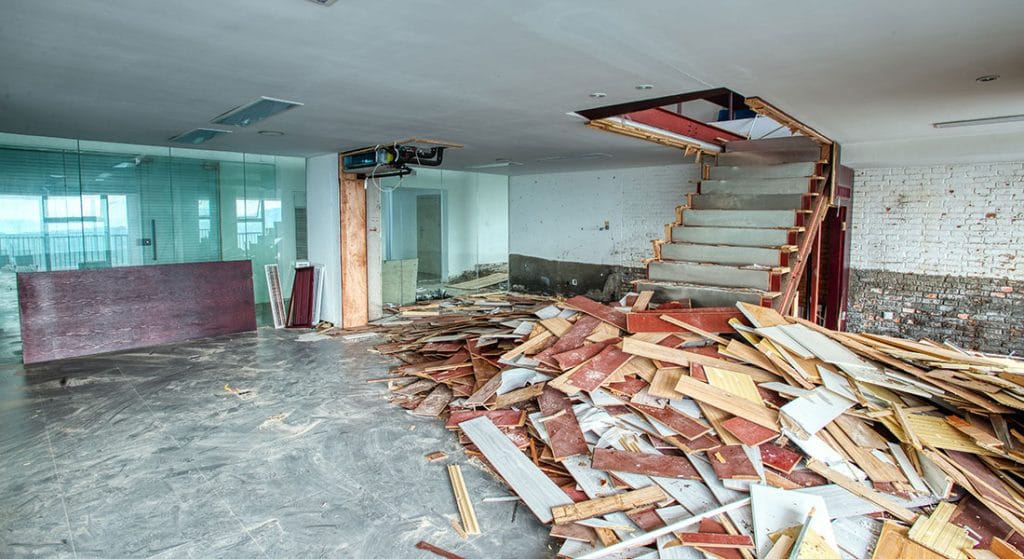
When relocating, renovating, or reaching the end of a commercial lease, an office defit demolition is often a mandatory requirement. Done properly, it allows businesses to hand back a clean, compliant space — and move into the next phase with minimal disruption.
This guide explains what an office strip-out involves, what gets removed, how downtime can be minimised, and what business owners should plan for before works begin.
What Is an Office Defit Demolition?
An office defit (also known as an office strip-out) involves removing all non-structural elements added during the tenancy, returning the space to a base-build or “make-good” condition.
Typical scenarios include:
- End-of-lease make good requirements
- Office refurbishments or re-brands
- Relocations or downsizing
- Preparing a space for a new tenant
A professional office defit ensures compliance with lease conditions, safety regulations, and building management requirements.
What Gets Removed During an Office Strip-Out?
An office defit demolition is systematic and controlled. Common elements removed include:
Partitions and Internal Walls
- Plasterboard partitions
- Glass walls and meeting room dividers
- Demountable wall systems
These are removed carefully to avoid damage to base-building structures.
Flooring and Floor Coverings
- Carpet tiles
- Vinyl flooring
- Raised access floors (where required)
- Adhesives and screed
Proper removal ensures the subfloor is ready for handover or refit.
Ceilings and Services
- Suspended ceiling tiles and grid systems
- Redundant ducting or bulkheads
- Light fittings (where required by lease)
All works are coordinated to maintain building safety standards.
Furniture and Fixtures
- Workstations and desks
- Storage units and shelving
- Joinery, kitchenettes, and cupboards
Furniture is either removed for disposal, recycling, or client relocation.
The Office Defit Demolition Process (Step-by-Step)
1. Site Inspection and Scope Confirmation
The process begins with a site inspection to:
- Review lease make-good obligations
- Identify materials, access points, and constraints
- Confirm operating hours and building rules
A clear scope prevents delays and unexpected costs.
2. Planning and Compliance
Before works commence, the demolition team prepares:
- Safe Work Method Statements (SWMS)
- Dust, noise, and waste-management plans
- Coordination with building management
This ensures compliance with WHS regulations and strata or landlord requirements.
3. Controlled Strip-Out Execution
The strip-out is completed in stages:
- Furniture and loose fixtures removed
- Ceilings and services dismantled
- Partitions and wall linings removed
- Flooring stripped back to base surface
All works are carefully sequenced to minimise disruption.
4. Waste Removal and Recycling
Office defits generate significant waste. Professional demolition teams:
- Separate recyclable materials (metal, timber, carpet)
- Dispose of waste at licensed facilities
- Provide waste-diversion documentation if required
This supports sustainability goals and building compliance.
5. Final Clean-Up and Handover
Once demolition is complete:
- All debris is removed
- Floors are swept and vacuumed
- The space is left clean, safe, and inspection-ready
The result is a builder- or landlord-ready office space.
How to Minimise Downtime During an Office Defit
For most businesses, downtime is the biggest concern. It can be minimised by:
- Scheduling works after hours or on weekends
- Using phased demolition for large offices
- Coordinating closely with removalists and fit-out teams
- Choosing a demolition contractor experienced in live commercial environments
Good planning can reduce downtime from weeks to just days.
Key Things Businesses Should Plan For
Before starting an office defit demolition, consider:
- Lease make-good requirements
- Building access times and lift bookings
- Noise restrictions
- IT and data cabling removal
- Insurance and contractor licensing
Addressing these early avoids costly last-minute issues.
Why Use a Professional Office Defit Demolition Contractor?
A specialist commercial demolition contractor provides:
- Fully licensed and insured works
- Strict safety and compliance processes
- Faster turnaround times
- Minimal disruption to staff and neighbouring tenants
Most importantly, they ensure your space is handed back on time and on budget.
Ready to Start Your Office Defit?
If you’re planning an office relocation, renovation, or end-of-lease make good, professional demolition makes all the difference.
👉 Speak to our commercial team about your office defit.